Who controls the funds?
Preserve the records, reconcile the ledger, and identify who imposed the restriction and who has authority to release funds.
Mercury confirmed an indefinite hold, acknowledged unanswered contact, and then called the matter resolved. Read the official letter and the full public statement. Who controls the money, and who must answer?
January 6 to November 20, 2026
According to the supplied statement, the reviewed correspondence does not establish repayment. A referral or a closed complaint is not proof that funds were returned.
The official Mercury letter comes first, followed by the complete two-page public statement. Select any page to view it at full size.
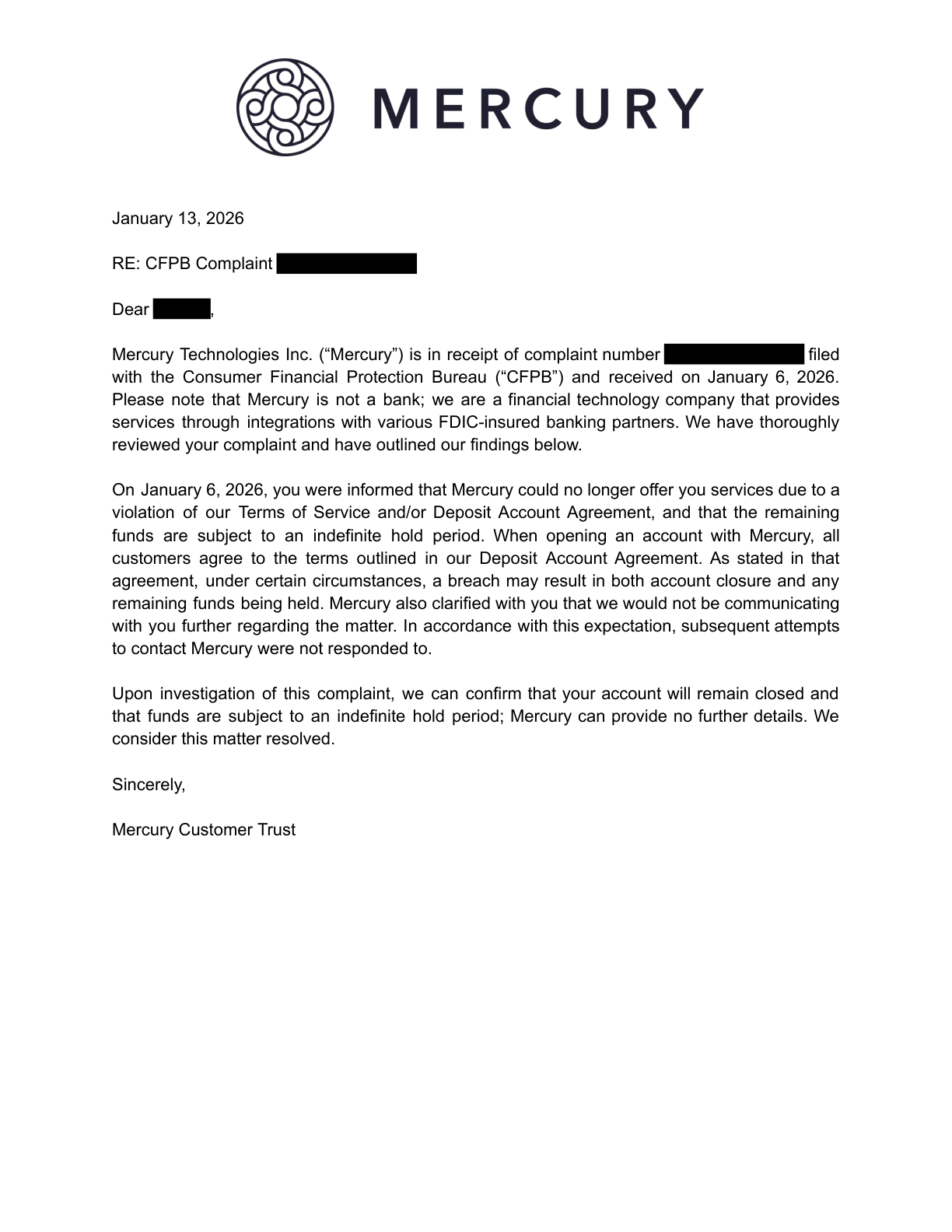
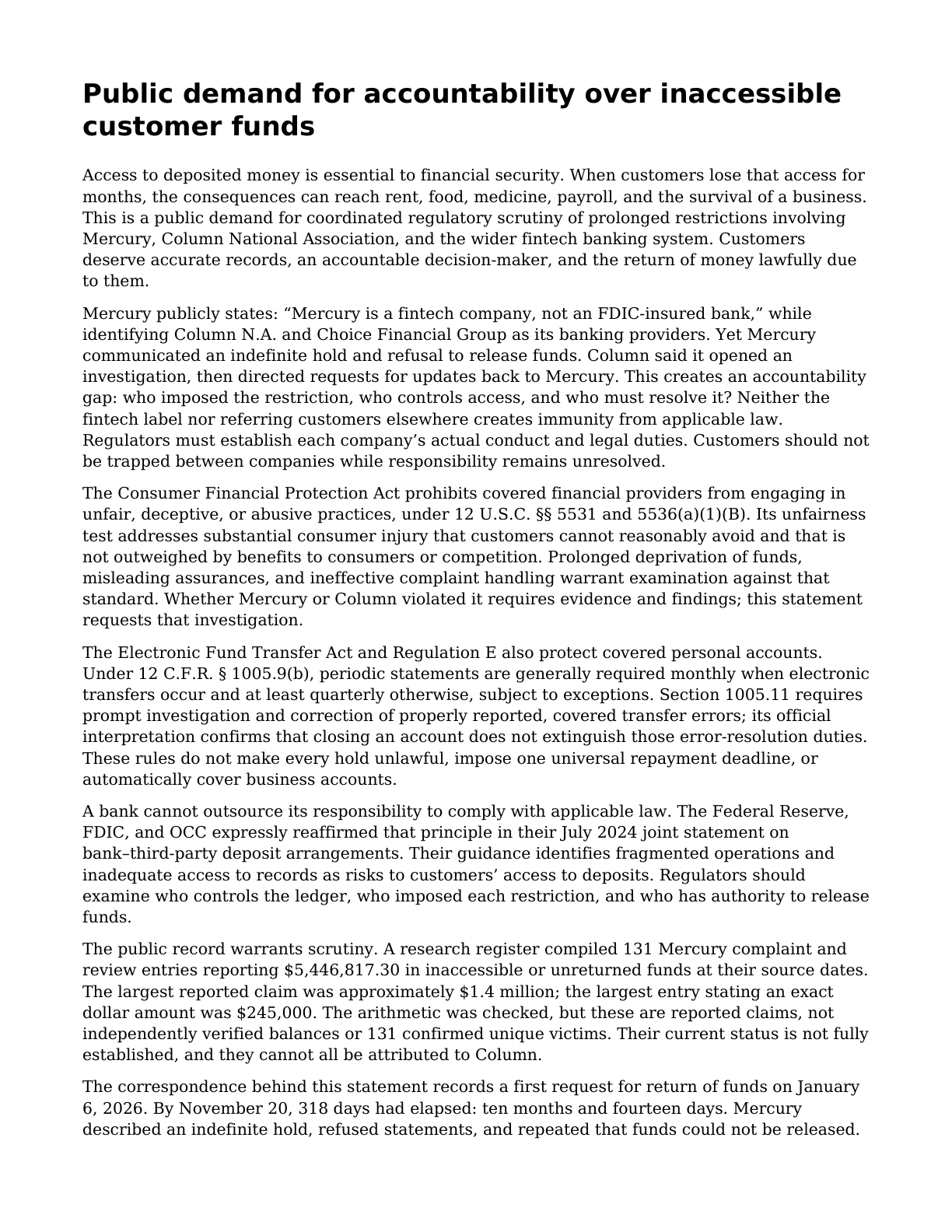
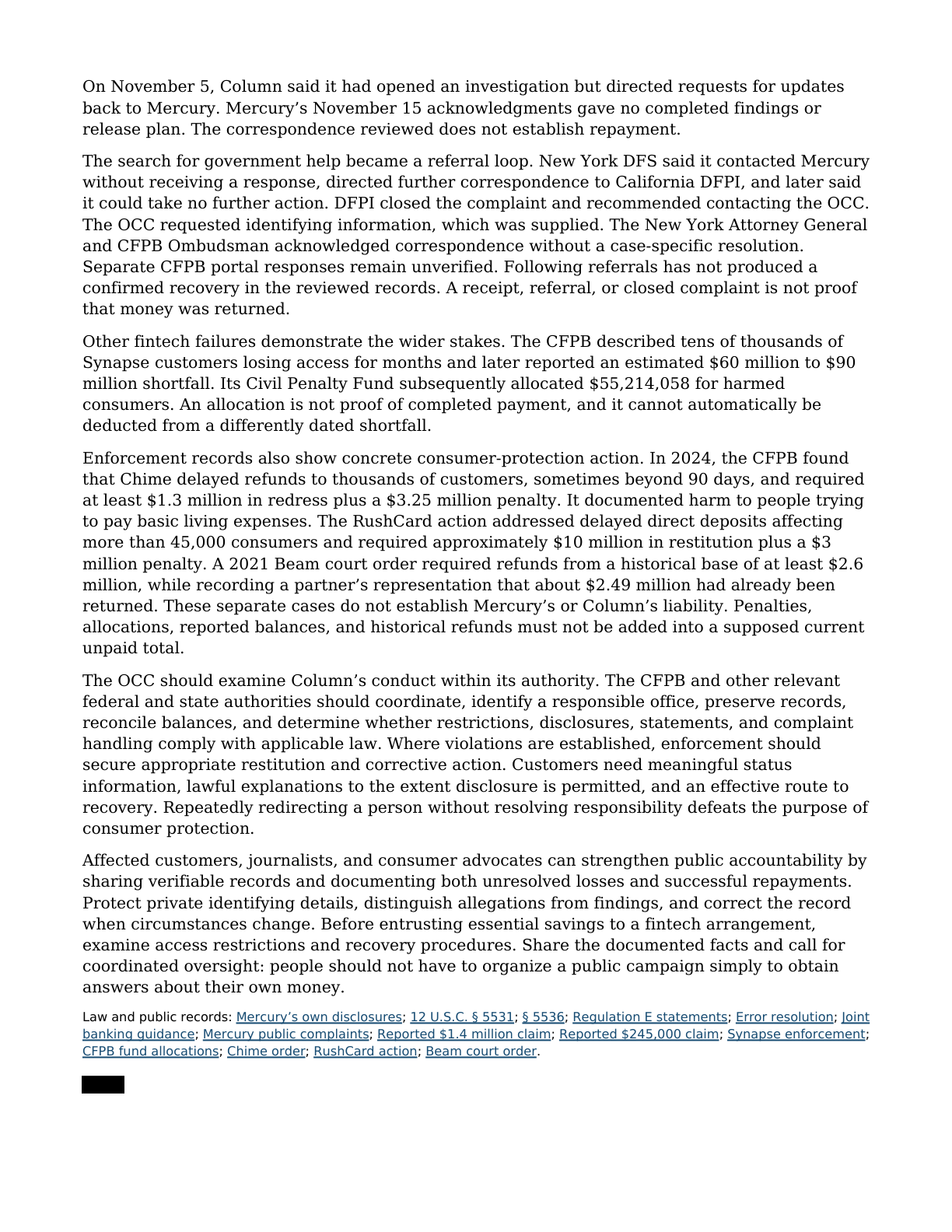
Evidence boundary. The letter documents Mercury’s stated position. The other correspondence, referral history, and absence of confirmed repayment are described in the supplied statement; the underlying records are not all reproduced here. The statement cites a prior compilation of 131 complaint and review entries reporting $5,446,817.30. Those are reported claims, not independently verified balances or 131 confirmed unique victims; their current status is not established. These documents request investigation and do not establish theft, fraud, or an unlawful hold.
Customers deserve accurate records, an accountable decision-maker, and the return of money lawfully due to them. Regulators should establish the facts and coordinate a meaningful route to resolution.
Preserve the records, reconcile the ledger, and identify who imposed the restriction and who has authority to release funds.
Provide meaningful status information and lawful explanations to the extent disclosure is permitted. Referrals must lead to accountable review.
Examine restrictions, disclosures, statements, and complaint handling under the rules that apply. Secure appropriate relief where violations are established.
Journalists: independently examine these documents, investigate the accountability gap, and request responses from Mercury and Column.
People with first-hand experience: share factual accounts supported by records. Distinguish allegations from findings, and update the public record when funds are returned or circumstances change.